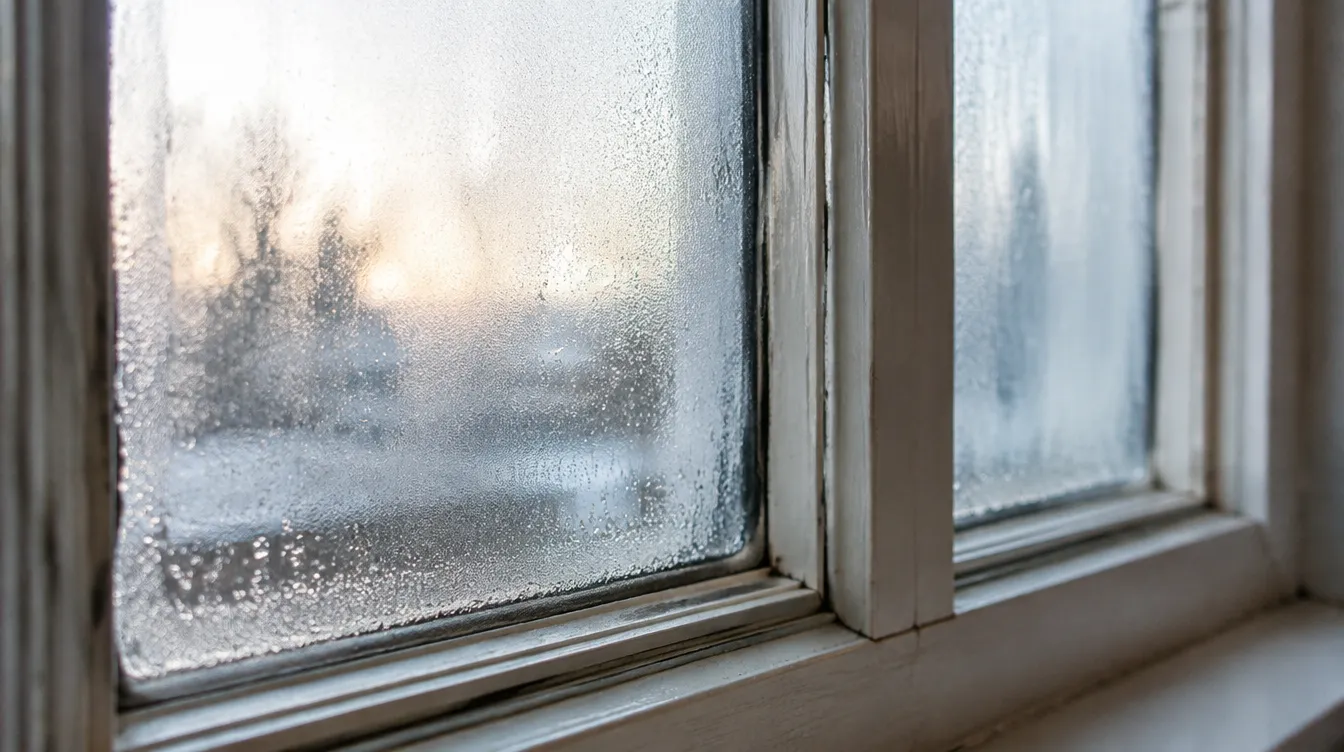
Fogging between the panes, a draft you can feel standing near the frame, and a window that won't stay open all mean something different. Some of these signs mean call a repair specialist. Others mean it's genuinely time to replace the window. WindowsRenew connects homeowners with trusted local contractors either way, so here's how to tell which situation you're actually in before you call anyone.
The signs that usually mean replacement
Condensation or fogging between the panes. This is the clearest sign. Double and triple-pane windows have a sealed, gas-filled space between the layers of glass. When that seal fails, humid air gets in and condenses on the cooler inner surface, according to the National Fenestration Rating Council (NFRC), the organization behind the energy performance labels on new windows. Once the seal has failed, the insulating gas is gone and cleaning won't fix the fog. The window itself needs to be replaced.
A frame that's visibly warped, cracked, or rotted. Wood frames especially are vulnerable to water damage over time. If you can see soft spots, cracking, or the frame no longer sits flush, repair is treating a symptom the frame itself won't support long-term.
Rising energy bills with no other explanation. Windows account for a meaningful share of a home's heat loss when their seals or insulating gas have degraded. If your heating and cooling costs have crept up and your windows are original to an older home, that's a real signal worth investigating.
Multiple issues showing up together. One symptom alone often has a simple fix. Condensation between panes plus persistent drafts plus a frame that's starting to show wear together point toward replacement being the more sensible long-term fix than repeated repairs.
The signs that often mean repair is enough
A window that's hard to open or close. This is frequently caused by paint buildup, worn hardware, or a house settling slightly over time, none of which require a new window. A repair specialist can often fix this in one visit.
A draft from worn weatherstripping. If the glass and frame are otherwise in good shape, a draft can sometimes come from aging weatherstripping rather than a failed window. Resealing is far cheaper than replacement and worth ruling out first.
Excessive outside noise. This is more often about the type of glass than window failure. Upgrading to laminated or thicker glass can help without a full replacement, depending on your goals and budget.
Minor hardware issues. A loose crank, a broken lock, or a torn screen are all repairable parts, not reasons to replace the whole window.
Why this distinction matters
Replacing a window that only needed a hardware fix wastes money. Repairing a window whose seal has already failed just delays an expense that's coming anyway, and in the meantime you're paying for the energy loss. Getting this right starts with knowing which category your situation actually falls into.
If you're seeing two or more of the replacement signs above, especially condensation between the panes, that's a reasonable point to get a second opinion. A free quote from a local contractor will tell you plainly whether your windows are worth repairing or whether replacement is the better long-term move, without the pressure of a sales call from five different companies.
References
- National Fenestration Rating Council: how sealed insulating glass units work and what causes seal failure and condensation between panes
- ENERGY STAR: energy performance testing and certification standards for residential windows
Ready to get started?
Get a free, no-obligation quote from a trusted local window replacement contractor. Takes about 2 minutes.
Get My Free Quote